Case Studies: Climate Displacement & Resilience
Climate change is increasingly affecting small businesses. Climate disasters, ongoing impacts such as increasing heat and rising sea levels, climate adaptation projects, and mitigation policies can all disrupt and displace small businesses. Public and private climate-related investments can also significantly change neighborhoods, compounding or accelerating factors associated with gentrification that cause small business displacement, such as rising rents.
BIPOC- and immigrant-owned small businesses in under-resourced neighborhoods are particularly vulnerable to both climate disasters and climate-related gentrification. Without effective climate resilience and recovery policies and support systems, small businesses often struggle to remain rooted in their communities.
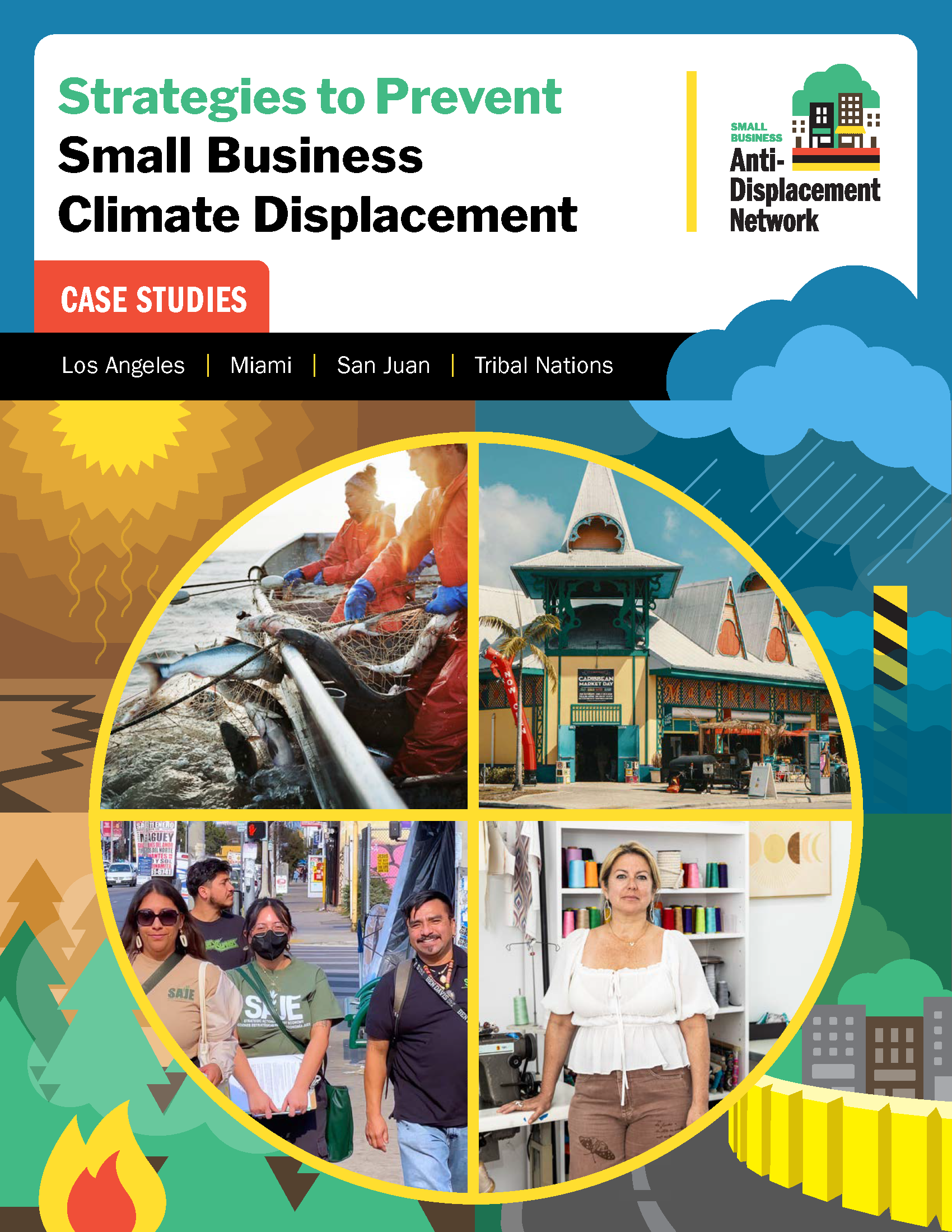
The case studies in this volume offer models for how to prioritize small business needs in climate-vulnerable communities. The case study authors and featured organizations have worked with diverse communities at different scales to prevent displacement during and after climate-related events.
- Jorge M. Pérez Metropolitan Center, Florida International University (Miami-Ft. Lauderdale)
- Strategic Actions for a Just Economy (Los Angeles)
- Taller Comunidad La Goyco (San Juan, Puerto Rico)
- American Sustainable Business Network (National)
Their case studies document different kinds of anti-displacement strategies, including climate resilience hubs, mutual aid efforts, small business grant programs, resource hubs, and affordable commercial space programs that have allowed small businesses to remain or rebuild. Also documented are new policies and programs related to commercial tenant rights, community benefits, and community ownership that are helping to strengthen local small business ecosystems as climate-related redevelopment and speculation take hold.